
AI Is US
What is AI already doing to our sense of who we are?

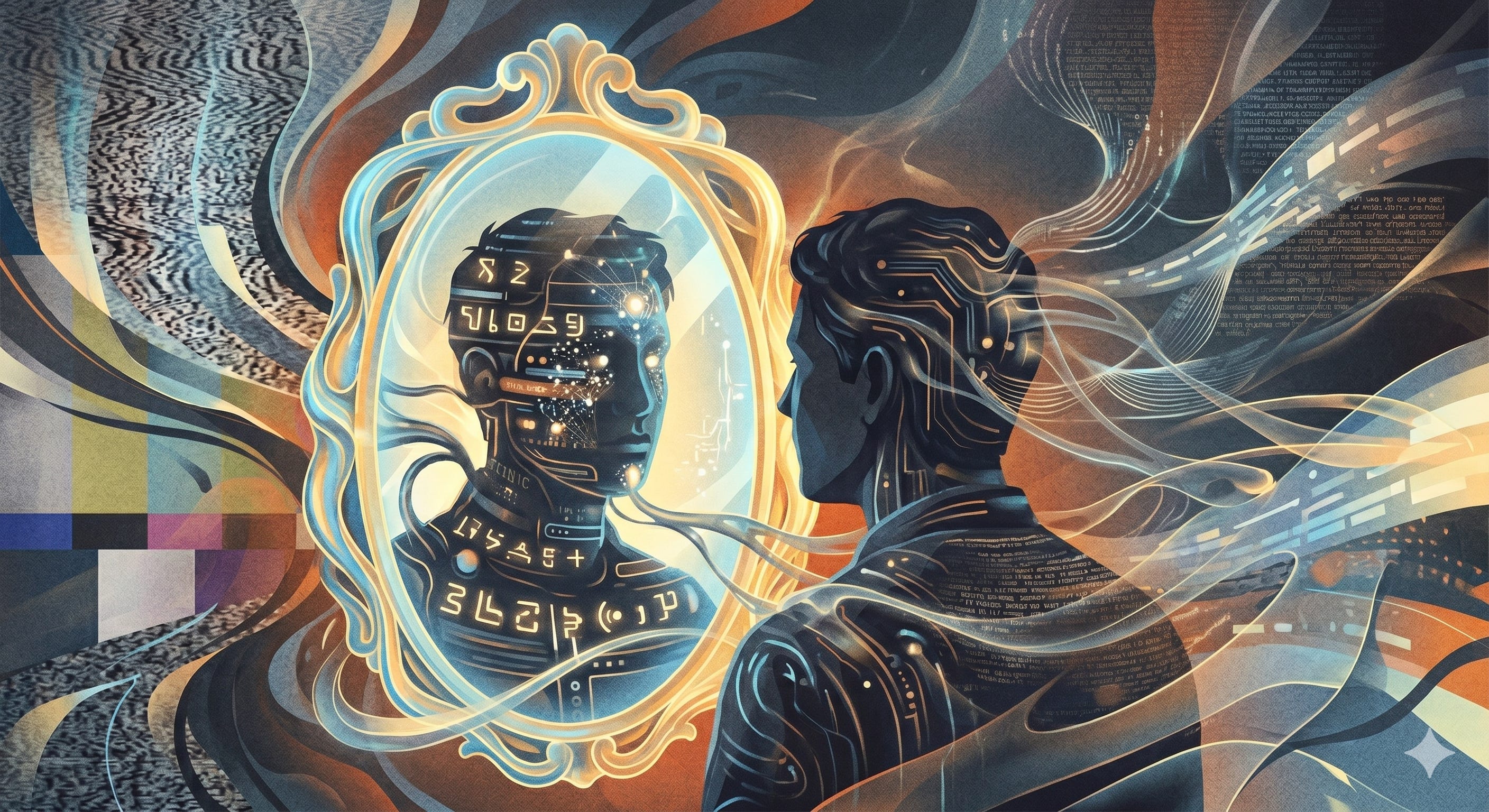
My colleague Laura Manley, Executive Director of the Shorenstein Center, wrote a piece for TIME that got me thinking about AI in a whole new way.
As a Center, we have focused on “traditional” media and all the ways it shapes our culture, politics, society—and us as individuals. I suspect my first exposure to feminism came watching I Love Lucy, whether I knew it or not.
Lucy, however, was not watching me back. News and entertainment, as mass media, both shaped and reflected public sentiment, but did not find us, engage with us, at an individual, intimate level.
And this is where Laura got me thinking about all the ways AI seeps into our sense of who we are.
We are not choosing between a human future and an AI future. We are already living in an augmented one. GPS reroutes us before we notice we are lost. Autocomplete finishes our sentences. Algorithms decide what news we see, what music fits our mood, and which products we didn’t know we needed.
Often, we are influenced by AI without even knowing it. When we log in to our emails, AI summarizes our messages and schedules our meetings. When we turn to our phones first thing in the morning, our social media feeds decide what we are angry about before we’ve even had our morning coffee.
The question is not whether AI will change us—it already has. The question is what it’s already doing to our sense of who we are.
There’s plenty of debate around our fading focus and shredded attention spans, the epidemic of loneliness as we lean into our digital lives, the need to “touch grass” as a means of rediscovering our humanity. But Laura urges a deeper dive into how the machines rewire us. It’s not enough to observe a digital sabbath or go on a mindfulness retreat. We need to reckon with our “Algorithmic Self”—an identity increasingly formed through recommendation loops, data profiles, and external validation rather than introspection.
We must notice, in real time, how the media and information we take in is changing who we are—even down to the words we use. Researchers have found that people increasingly use words such as “delve,” “realm,” and “meticulous” in everyday speech because they appear so frequently in AI-generated text. We are being shaped in ways we are barely noticing.
Read the whole thing; then see what you notice.